
Should You Bluetooth Upgrade Your Antique Radio?
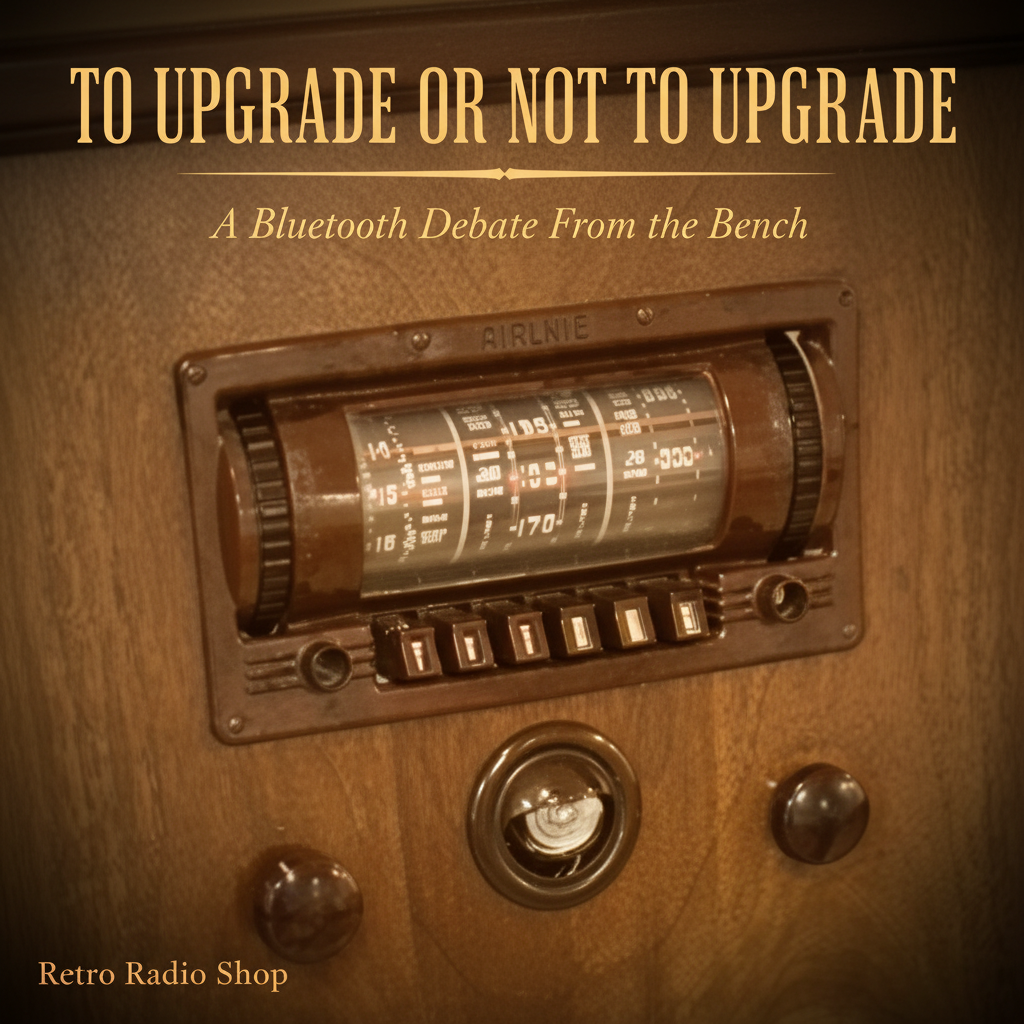
Should You Bluetooth Upgrade Your Antique Radio or Not Upgrade: A Bluetooth Debate From the Bench
I'll be honest with you — this is a conversation I have almost every week. A radio arrives on the bench, and the first question isn't always about what's wrong with it. Sometimes the question is: what do you want it to be when it leaves?
The debate over upgrading vintage tube radios with modern Bluetooth and FM capability is one of the most charged topics in the hobby. I've sat across the workbench from passionate purists who would sooner donate a radio to a museum than hear it stream Spotify, and I've spoken with families who simply want to hear music from their grandfather's radio again — through whatever means necessary. After years of doing this work, I don't think either side is wrong. The right answer depends entirely on the radio, the owner, and the honest assessment of what's actually sitting in front of you.
So let me lay out both sides of this argument — as fairly as I can — and then tell you about a radio I had in recently that made the answer about as clear-cut as it gets.
The Purist Perspective — And Why It Deserves Respect
The restoration purist's position is rooted in something genuinely important: preservation. Vintage tube radios are artifacts. They are physical records of a specific moment in engineering history, when clever people solved difficult problems with limited materials, and they did it with a kind of purposeful elegance that mass-produced modern electronics simply don't possess.
When a radio comes off the factory floor in 1939 with an original chassis, original tubes, original capacitors, and a hand-wound output transformer, it represents something complete. Every component was chosen deliberately. The interaction between the detector stage, the AVC circuit, and the IF transformers produces a sound character that is not just acceptable — it is unique, and it cannot be replicated by a chip.
Every radio that is converted rather than restored is a radio that future generations cannot learn from, study, or appreciate in its original form. The original electronics are typically discarded. The character of the radio — the drift, the warmth, the selectivity behaviour of a properly aligned superheterodyne — is gone. You've kept the cabinet and the dial glass and called it a restoration.
I have sympathy for this view. A perfectly restored 1940 Zenith console, with correctly recapped electrolytics, new resistors where needed, properly aligned IF transformers — that radio is a living piece of history. It should be restored. Full stop.
The Upgrader's Perspective — And Why It Also Has Merit
On the other side of the bench sits a different reality.
Not every radio that arrives in a shop is a candidate for a sensitive, historically accurate restoration. Many vintage radios have been sitting in garages, barns, and basements for forty years. Mice have been through them. Previous owners with good intentions and questionable skills have been through them. Components are missing. Transformers have burned. Original parts have been cannibalized for other projects, or simply lost.
And beyond the condition of the radio itself, there's the reality of who owns it. Not everyone who brings me a vintage radio is a collector. Many are family members who found a radio in an estate. They have no interest in the hobby, no desire to invest $400–600 in a full restoration, and no practical use for AM-only reception with a dial that won't quite hold calibration. What they want is their grandmother's radio playing music in the home again.
A radio sitting in a landfill is not being preserved. A radio with a working FM tuner and Bluetooth that is actually used — displayed, listened to, enjoyed — is in better shape than a perfectly original chassis sitting in a box. The upgrade keeps the cabinet, the dial, the knobs, and the physical identity of the radio alive in a home environment.
There is also a safety argument. Original filter capacitors in a 70-year-old AC/DC radio, unreplaced, can be genuinely dangerous. The line-connected B+ in a transformerless set is lethal. For a family with children who have no understanding of the risks, sometimes replacing the electronics entirely is the more responsible choice.
The Radio That Made the Decision Easy
Let me tell you about the Wards Airline 93BR-658 that came through the shop recently.
The Airline 93BR-658 is a dual-power console — a full-sized floor-standing cabinet designed for the living room, but with the clever addition of a 6-volt battery supply circuit alongside the standard AC wall connection. This made it usable in rural homes where grid power was unreliable or unavailable, a genuinely practical feature for its era. In original, complete condition it would be a handsome piece and worth a proper restoration.
This one was not in original condition. Not remotely.
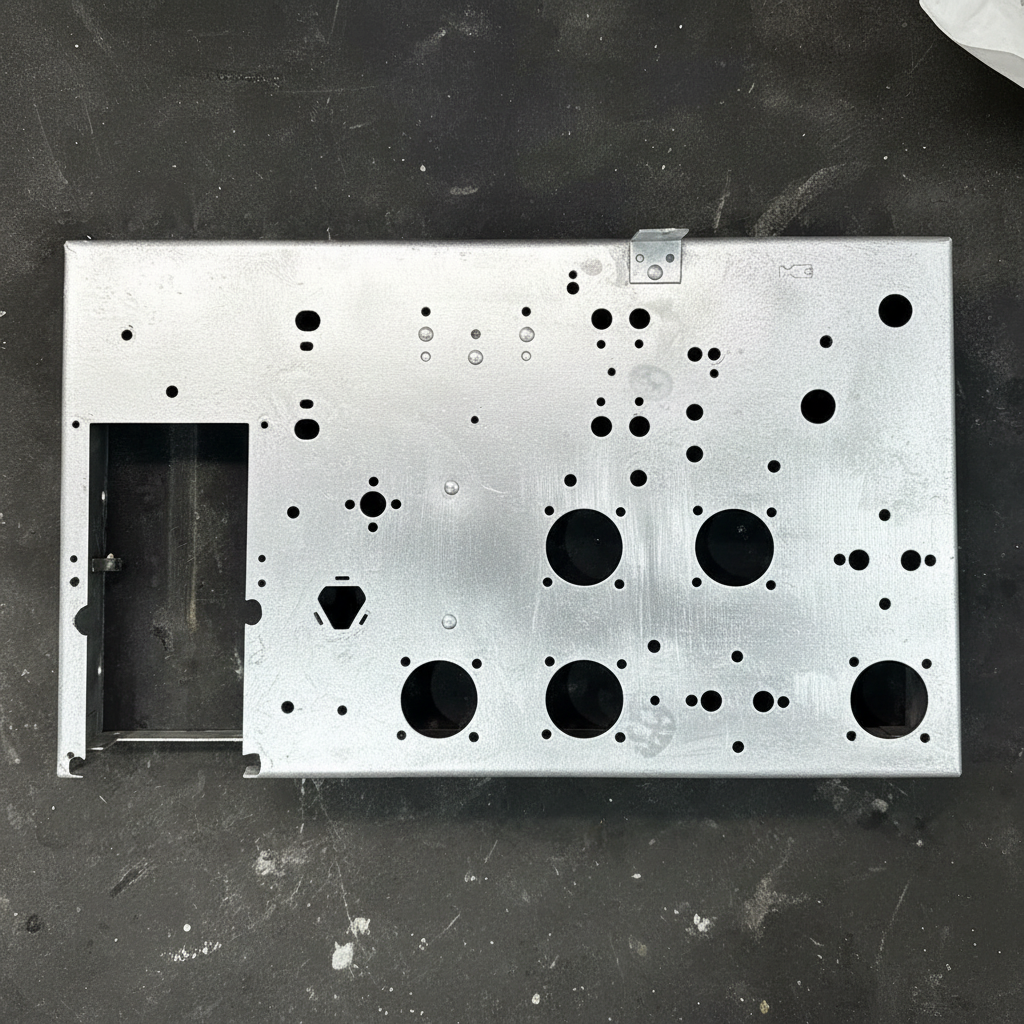
The family who brought it in told me it had been a treasured heirloom, passed down through the family — but several generations of well-meaning experimenters had been at it. The chassis had been modified and re-modified over the decades, with original components altered, bypassed, or removed. When the mice finally got into storage with it, they finished the job. The vibrator was gone. The power and one IF transformer was gone. The associated power supply components — gone. The original speaker assembly had been removed at some point and never replaced.
A cabinet, a dial, a tuning condenser, some knobs, and a chassis that had been picked over to the point where a purist restoration would have required sourcing an entire donor chassis — a parts radio of the same model — to have any hope of returning it to original specification.
The family knew this. I told them plainly what that path would cost and how long it would take. They had a limited budget. They had no interest in AM-only reception. They specifically asked for FM and Bluetooth. And they were clear: they loved this radio, they wanted it playing music in the living room, and they were not interested in a years-long, expensive search for correct-spec replacement parts.
In this case, the decision made itself.
Electronics Assessment — Beyond Reasonable Repair
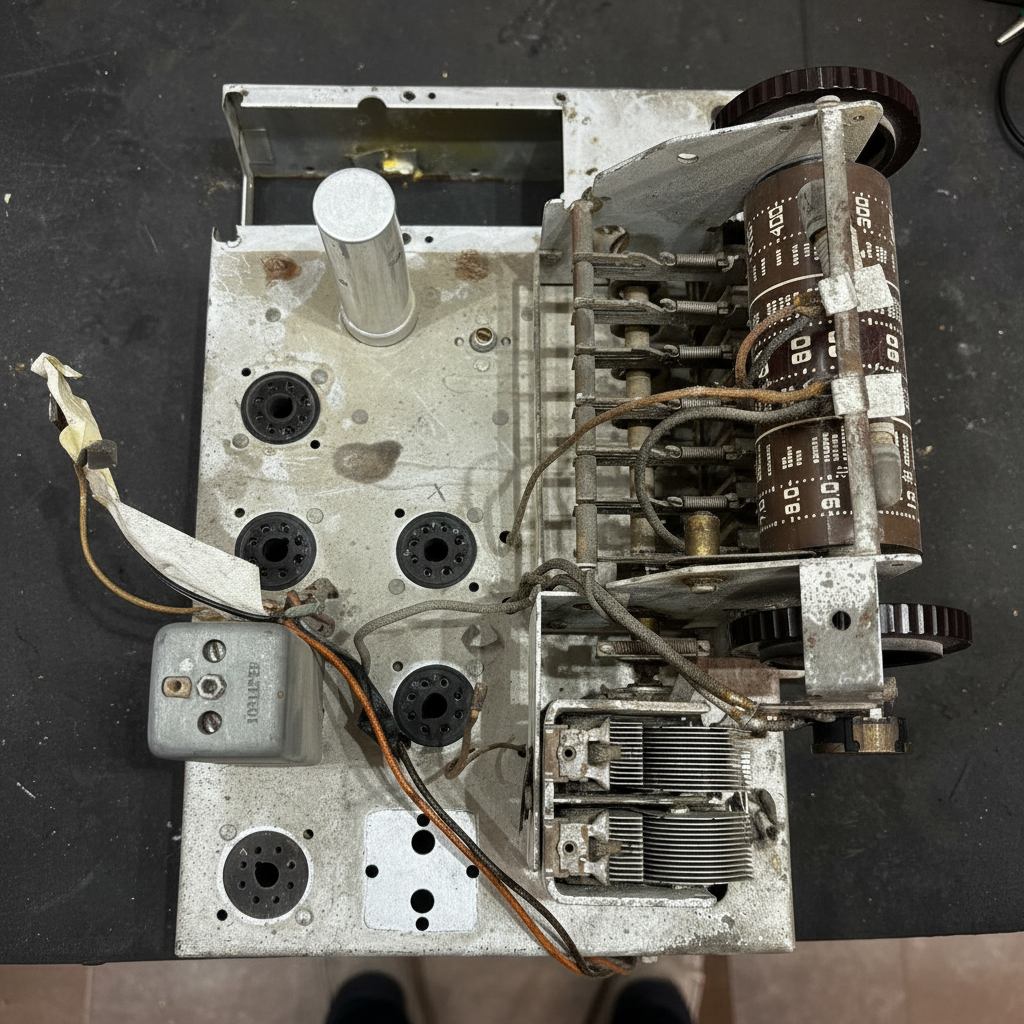
The findings were not encouraging. Beyond the missing components, the resistors throughout the circuit had drifted significantly — some by 50% or more from their nominal values. Of course the electrolytic capacitors had failed or degraded substantially, as is standard in any radio of this age, and moisture had accelerated the deterioration considerably.
A complete restoration of the original electronics — replacing every capacitor and resistor, sourcing a power and IF transformer and speaker, was technically possible but would have represented a disproportionate investment of parts and labour relative to the radio's original performance capability. At full restoration, the radio would deliver AM-only reception from an analogue circuit designed to the standards of the late 1930s. Functional, characterful, but limited.
The decision was made to proceed with a Retro-RAD conversion — a modern replacement electronics kit, designed by Retro Radio Shop, specifically for vintage radios that retains the original appearance while delivering modern audio performance.
The Retro-RAD Bluetooth Upgrade Solution
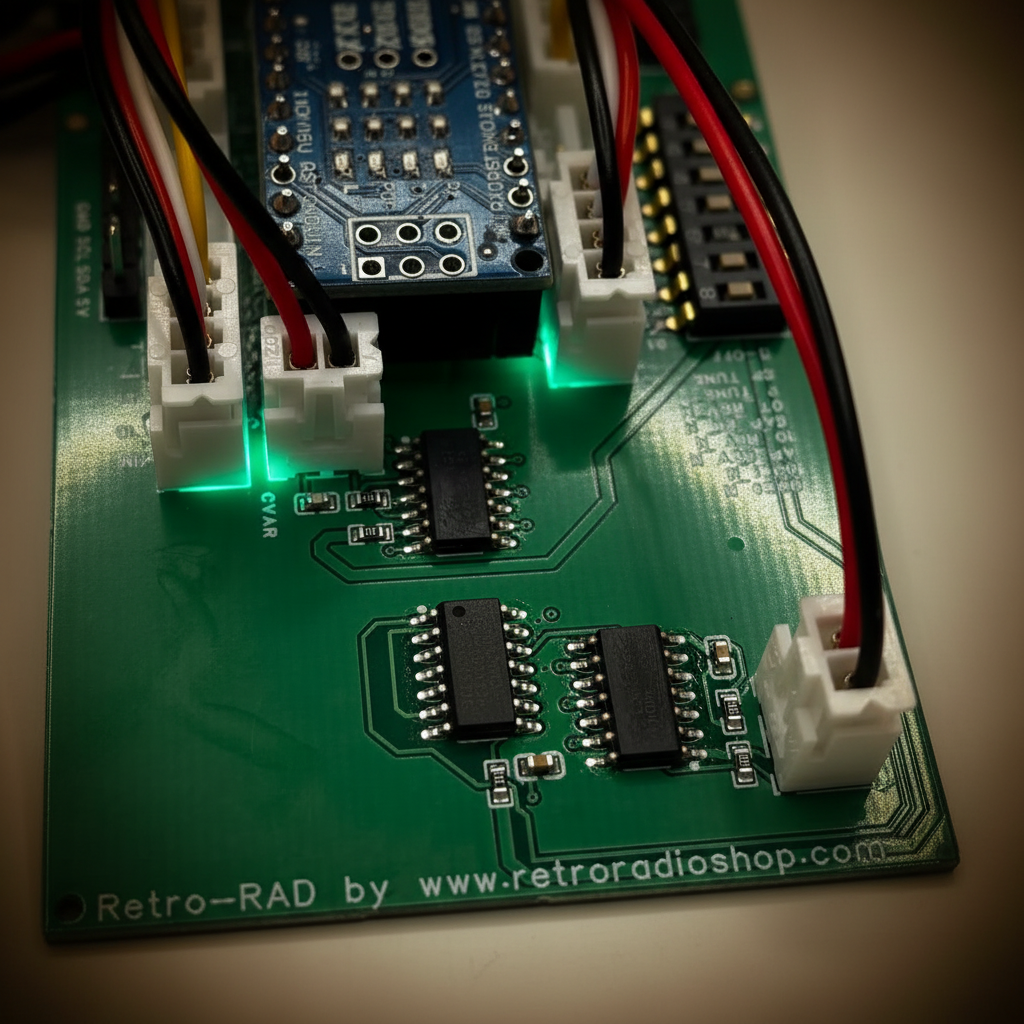
This is where the proprietary Retro-RAD system earns its place.
The Retro-RAD is a modern electronics module we've developed specifically for situations like this. It provides FM tuning and Bluetooth audio streaming, but what makes it genuinely different from simply stuffing a Bluetooth speaker into a cabinet is how it integrates with the original radio hardware.
The Retro-RAD measures the position of the original tuning assembly — whether that's a variable air capacitor like the one in the Airline, a set of permeability tuning slugs, or a potentiometer — and uses that position to select the corresponding FM frequency. When you turn the tuning knob on the Airline 93BR-658, the original dial pointer moves across the original frequency scale, and the Retro-RAD locks onto the appropriate FM station for that position. The experience of tuning the radio is completely preserved.
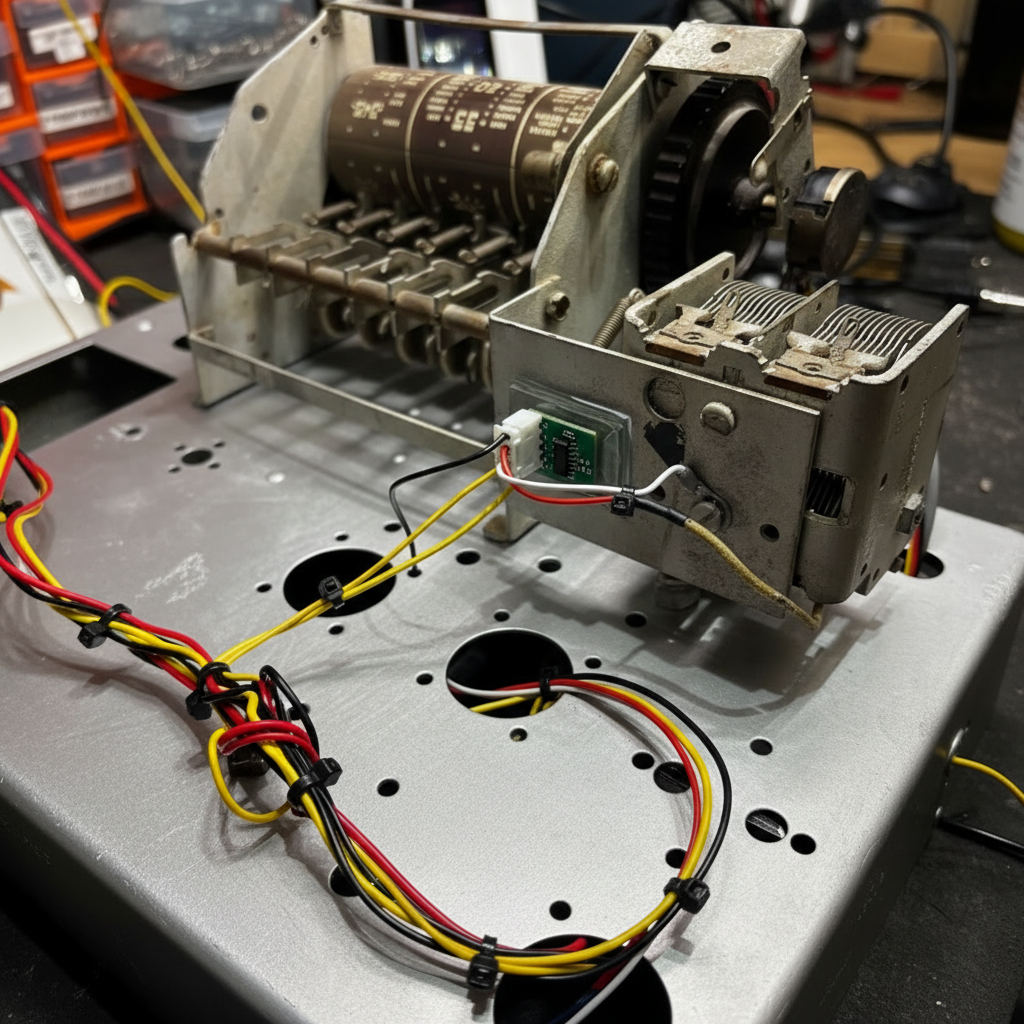
The volume control uses the original potentiometer. The original power switch is retained and functions exactly as it always did — flipping it on and off just as the family always has. The speaker drives through the original opening with a correctly-sized replacement driver. The cabinet, dial glass, knobs, and escutcheon are completely untouched. Stand in front of this radio and you cannot tell, by looking at it, that anything has been changed.
The Retro-RAD installation gave the family the FM and Bluetooth capability they specifically requested, at a budget that was actually achievable, on a chassis that was never going to be restored to original specification. The radio now sits in the living room and plays music every day. That, to me, is a good outcome.
Where I Land on This and Bluetooth Upgrade
My personal view, after years on the bench, is that the radio should drive the decision — not ideology.
A radio in restorable condition, with intact original components and a complete chassis, should be restored. The technology, the sound, and the history deserve to be preserved. I will always make that case first. Non invasive adjuncts for listening to Bluetooth audio, such as our MicroMitter AM transmitter, are always suggested. Our shop also has a number of other Bluetooth Options. One of the most popular, aside from the MicroMitter, is the Aux input PCB that correctly audio sums and isolates the hot chassis set by way of an isolation transformer. A polarized plug, hot to switch, and an X-rated line filter are always used with this addition.
A radio that is incomplete, heavily altered, safety-compromised, or for which restoration is genuinely not practical or not desired by its owner — that radio is a candidate for a Retro-RAD upgrade. Better to keep it alive in a home than pristine in a box, or worse, discarded.
The purists and the upgraders are arguing about the same thing, really: they both want these radios to matter. They just disagree on what that looks like. I respect both positions, and I try to find the right answer for what's actually on the bench.
Most of the time, the radio tells you what it needs. You just have to listen.
Nice article on this explosive topic. It has given me encouragement for what I do. What I do is take non-working non-collectable basket cases and do full Bluetooth conversions. I never, ever dismantle a working set. I find ones in desperate condition, that are one step away from the dumpster, but beautiful in design, and save them. I make them relevant again. I respect the outside design and lovingly restore that while modernizing the insides and making the radio useable for the 21st century, instead of relegating it to its fate of a cellar or barn or dumpster.
I want to reiterate that I only renovate non-working, low value but beautifully designed radios and give them a re-birth.