
1968 Chrysler Vintage Car Radio Repair And Bluetooth Upgrade
Bendix 7BC / Mopar 376 — Vintage Car Radio Repair & FM/Bluetooth Upgrade
May 2026 • Retro Radio Shop
Some radios arrive with straightforward problems — a bad capacitor, a seized dial cord, a stuck potentiometer. Others carry the full weight of decades of neglect. This Bendix 7BC, better known under its Mopar designation as the 376, firmly belongs in the second category.
The Backstory: Extended Humidity Exposure
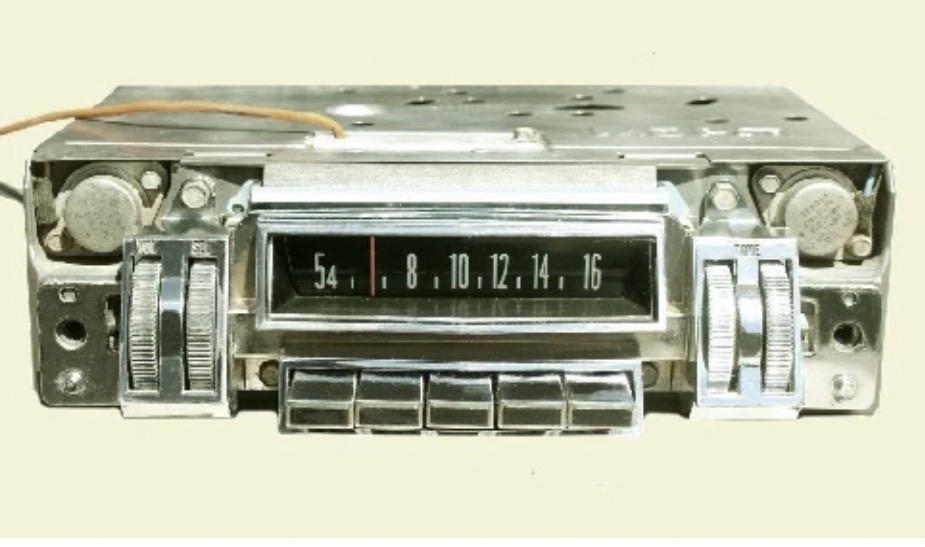
The Bendix 7BC is a mid-century AM car radio produced for Chrysler Corporation vehicles under the Mopar parts designation 376. This is a solid-state receiver. A transistor-based design from the mid-1950s with a cast metal chassis housing. Within the housing are the IF transformers, permeability-tuned RF and oscillator coils, and associated hardware. The exterior chrome and aluminum trim on these radios is typically robust, but the internals are far more vulnerable.
This particular unit spent what appeared to be an extended period in a humid environment - possibly a garage, basement, or outbuilding. The moment we removed the chassis from the cabinet, the evidence became apparent. A fine layer of oxidation coated virtually every metal surface. Surface rust formed along the seams of the IF transformer cans. Trimmer capacitor slugs froze in place. Component leads throughout the chassis turned from their original bright copper to a dull, greenish-grey. The insulation on several wire runs became brittle.
Why Humidity Is So Damaging Moisture accelerates galvanic corrosion wherever dissimilar metals meet — and a vintage radio is full of those junctions. Aluminium slugs in IF transformers corrode and swell, locking them tight. Carbon composition resistors absorb moisture and drift significantly in value. Electrolytic capacitors deteriorate. Even the carbon tracks inside potentiometers can become resistive or open-circuit entirely.
The IF transformers on this unit were checked and found to have corroded adjustment slugs. The small ferrite or brass cores that are rotated to peak the transformer at the 455 kHz intermediate frequency. Attempting to turn them without proper treatment risks snapping them off entirely, which is an irreversible failure. A penetrating lubricant was carefully introduced and allowed to soak before gentle, incremental attempts were made to free them.
The trimmers — small variable capacitors used for alignment — were similarly affected. Trimmer capacitors of this vintage are often constructed with thin mica dielectric and aluminium or silver foil plates. Oxidation on the contact surfaces introduces resistance and instability, making accurate alignment impossible without first addressing the mechanical condition.
The Mechanical Damage: Seized Controls & Broken Gears
The humidity damage, extensive as it was, turned out to be a secondary concern. The more acute problem became immediately obvious when someone attempted to operate the controls: both the tuning mechanism and the volume potentiometer completely seized. Moisture, dust, and time combined to lock them solid.
This is where the real damage occurred. Rather than recognizing the seizure for what it was and applying appropriate remediation, someone simply forced the knobs. The result was predictable and unfortunate — something had to give, and in both cases, the drive gearing broke rather than the seized component.
A Common Mistake When a vintage radio’s controls feel stiff or seized, never force them. The knob drive gears in radios of this era are frequently made from zinc die-cast (pot metal) or early nylon composites — materials that are brittle with age. A small amount of penetrating oil on the potentiometer shaft or tuning capacitor bearings, given adequate soak time, will free the vast majority of seized controls without any gear damage and you wont need professional vintage car radio repair.
The Tuning Assembly — Broken Pinion Gear
The tuning mechanism on the Bendix 7BC uses a gear-driven system to position ferrite or powdered iron slugs in and out of the tuning coils, varying the inductance to select stations. The knob drives a small pinion gear, which in turn engages the tuning slug drive shaft via a larger drive gear. When someone applied excessive torque to the frozen shaft, the pinion gear — the smallest and most vulnerable component in the drivetrain — sheared clean off its shaft.
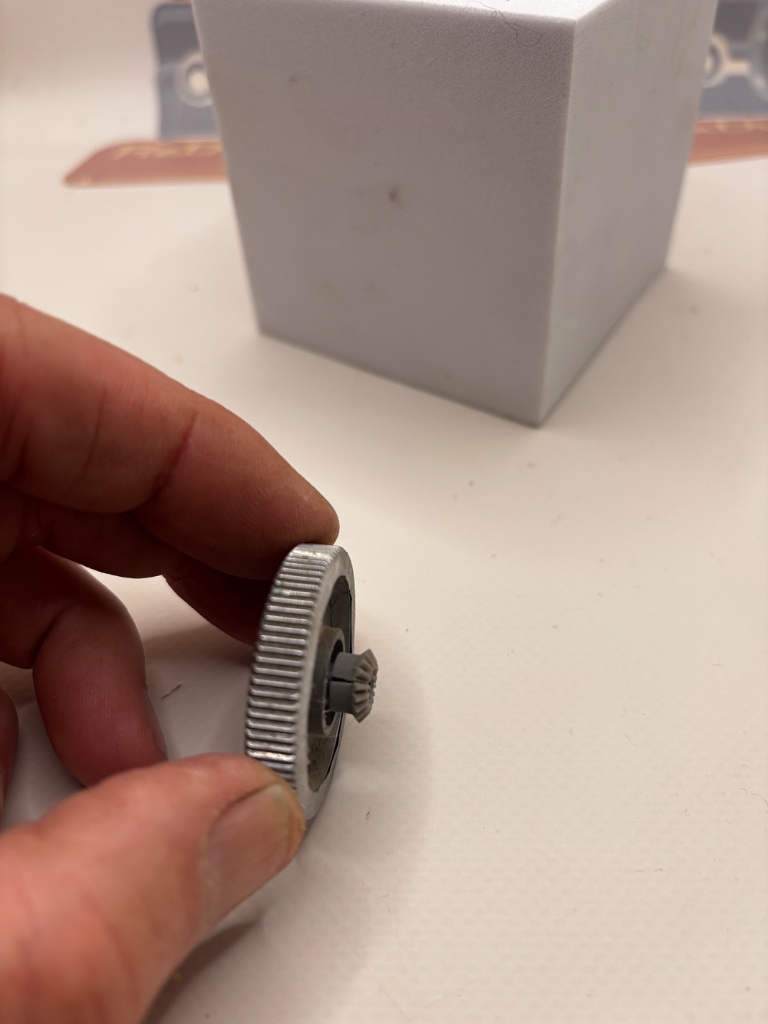
It is worth noting a distinction between Bendix-manufactured Mopar radios and the Philips-built equivalents of the same era. The Philips versions used a chain-and-sprocket tuning mechanism — a fine chain similar in construction to a classic bath plug pull chain, running over small sprockets to turn the capacitor. These chain drives are notably more forgiving under overload: the chain simply slips or skips rather than fracturing a gear. Bendix chose the gear approach, which is more precise in feel but less tolerant of abuse.
The Volume Potentiometer — Stripped Crown Gear
The volume control uses a crown gear arrangement — a flat disc gear with teeth around its perimeter, driven by a smaller gear attached to the volume knob shaft. When the potentiometer shaft was forced while seized, the teeth on a section of the crown gear stripped out rather than the shaft freeing up.
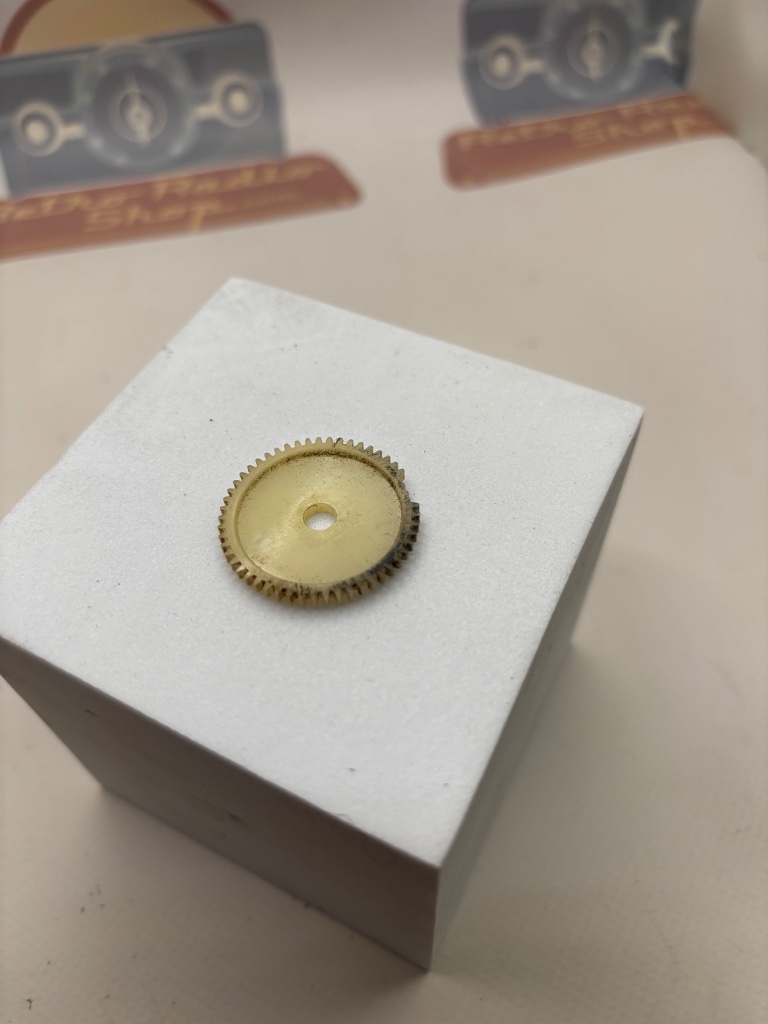
Fortunately, stripped crown gears of this type often offer a serviceable repair option that requires no replacement parts at all. The stripped section represents only a small arc of the gear’s full circumference. Both the knob’s range of travel and the potentiometer’s functional sweep occupy a defined arc — and crucially, that arc does not need to include the damaged section. By rotating the crown gear on its hub to a position where the stripped teeth fall outside the operational sweep of both the driving gear and the knob’s travel stops, the gear becomes fully functional again.
Repairing the Pinion Gear — Epoxy Bonding In Vintage Car Radio Repair
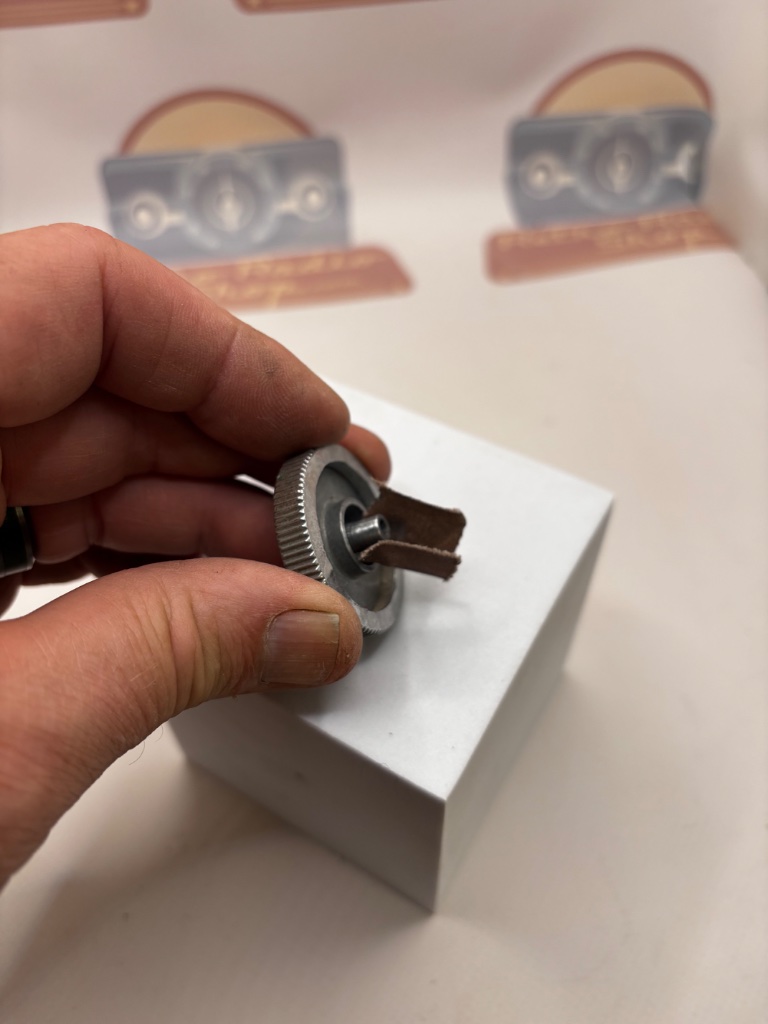
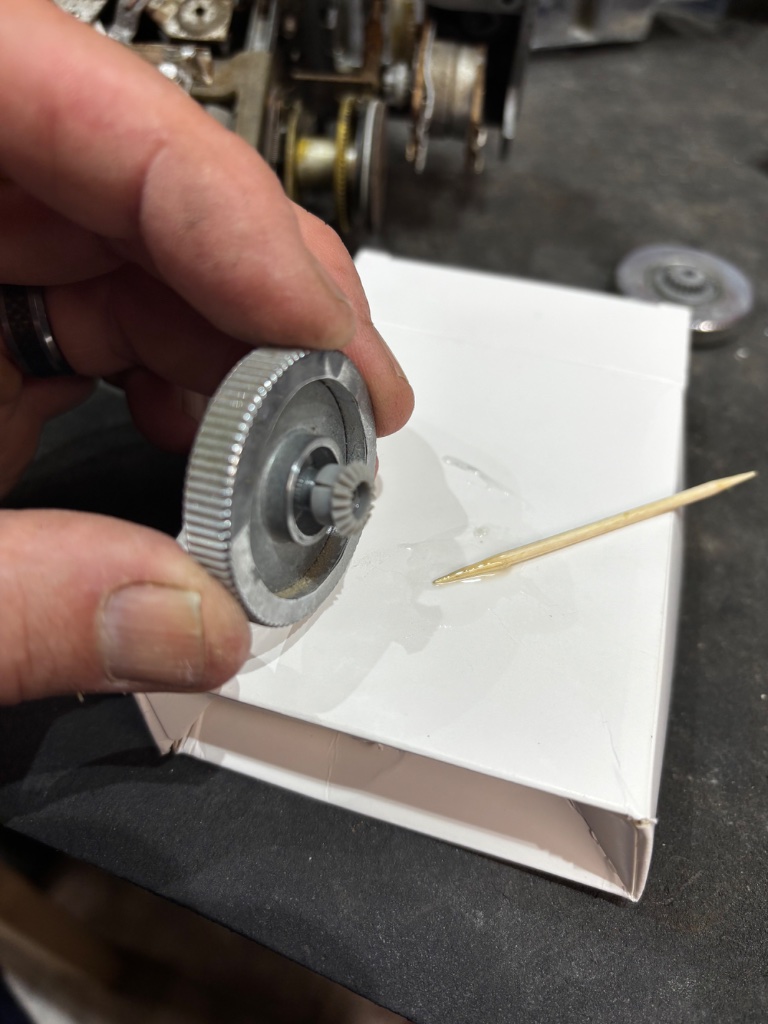
The broken pinion gear presented a more involved repair. In addition to being separated from its shaft at the hub, the gear body itself had developed a visible crack — a consequence of the violent stress applied when the shaft was forced while seized. The repair method chosen was two-part epoxy adhesive, applied with a toothpick for precision.
Why Sanding the Shaft Matters
Typically, a vintage radio’s gear assembly features a polished metal shaft — smooth by design, so that the gear or control can rotate freely during normal operation. This smooth finish creates exactly the wrong surface for epoxy adhesion. Epoxy acts as a mechanical adhesive: it relies on interlocking with microscopic surface irregularities. The solution involves sanding the shaft with 120–180 grit abrasive paper before applying adhesive, creating a deliberately roughened surface.
Electronics Assessment — Beyond Reasonable Repair
With the mechanical issues addressed, the team carried out a full electrical assessment of the chassis. The findings did not encourage them. The resistors throughout the circuit had drifted significantly — some by 50% or more from their nominal values — due to the prolonged moisture exposure. The electrolytic capacitors had failed or degraded substantially.
The technicians determined that a complete restoration of the original electronics was technically possible but would have represented a disproportionate investment of parts and labour relative to the radio’s original performance capability. At full restoration, the Bendix 7BC would deliver AM-only reception. The customer decided to proceed with a Retro-RAD conversion.
The Retro-RAD Conversion Kit
Retro Radio Shop produced the purpose-designed printed circuit board assembly, the Retro-RAD, which replaces the original transistor-based electronics in a vintage car radio. It enables FM tuning, Bluetooth audio streaming, and auxiliary input capability — all through the original controls, dial, and speaker of the vintage radio.
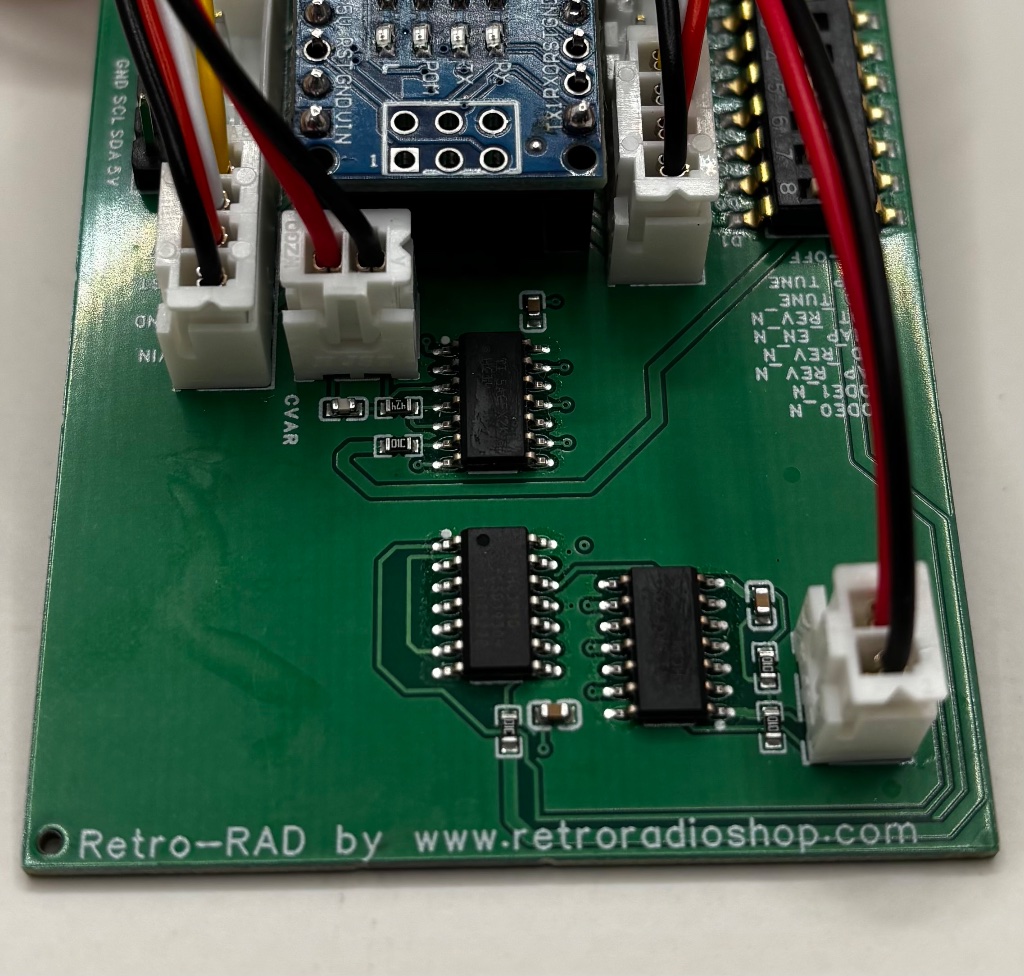
One of the more technically interesting aspects of the Retro-RAD system is that it can measure LC. The Retro-RAD board can interface with the original permeability tuning assembly. The board measures the inductance of the original tuning assembly as it moves through its range and uses this measurement to determine the corresponding dial position — when you turn the tuning knob, it moves the pointer across the dial exactly as it did when the radio was new.
What is Permeability Tuning With Respect To Vintage Car Radio Repair? Rather than using a variable air capacitor, some car radios of this era used permeability tuning — moving ferrite or powdered iron slugs in and out of coil forms to vary the inductance, and therefore the tuned frequency, of the RF and oscillator circuits. The Retro-RAD’s LC measurement feature can read this varying inductance directly, giving accurate dial tracking with the original tuning hardware in place.
Finishing Touches — Dial & Cabinet
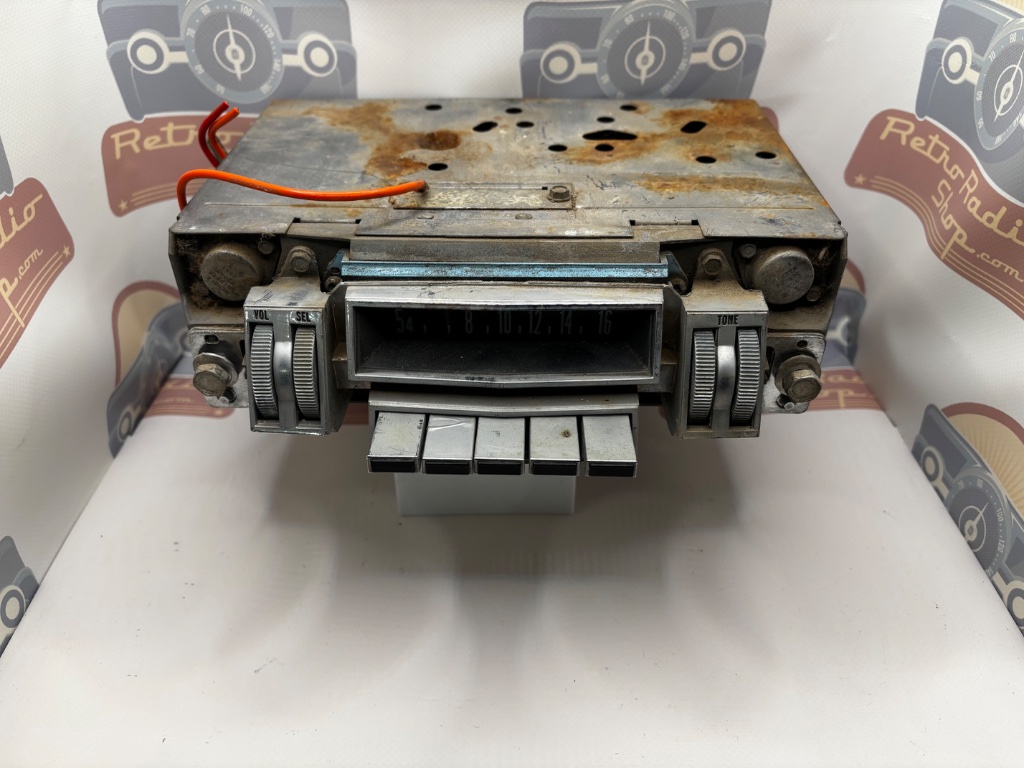
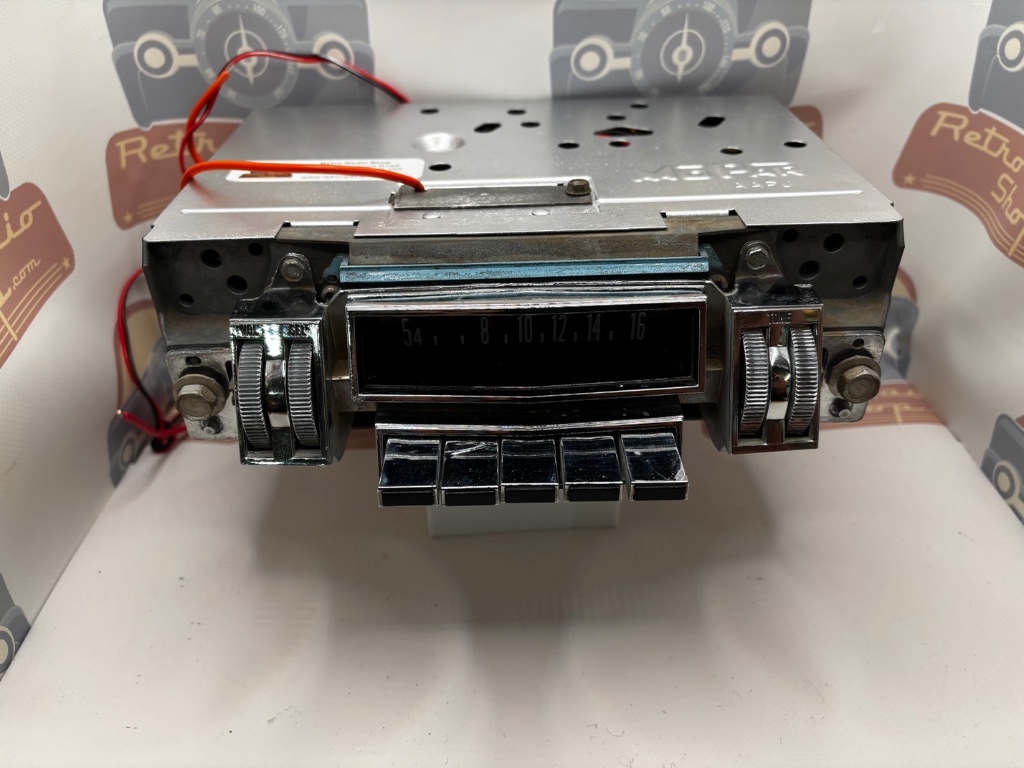
With the electronics complete and the mechanical systems restored, the team turned their attention to cosmetics. The dial pointer indicator — the small arrow or hairline that travels across the frequency scale as the tuning knob is rotated — had faded to near-invisibility over the decades.
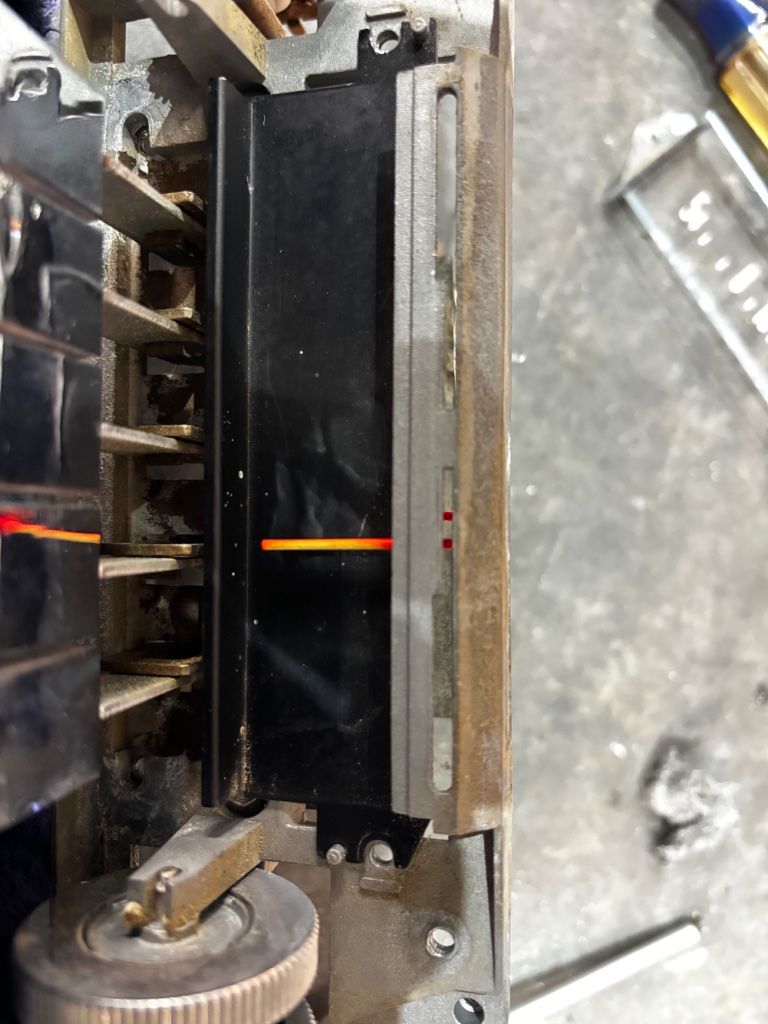
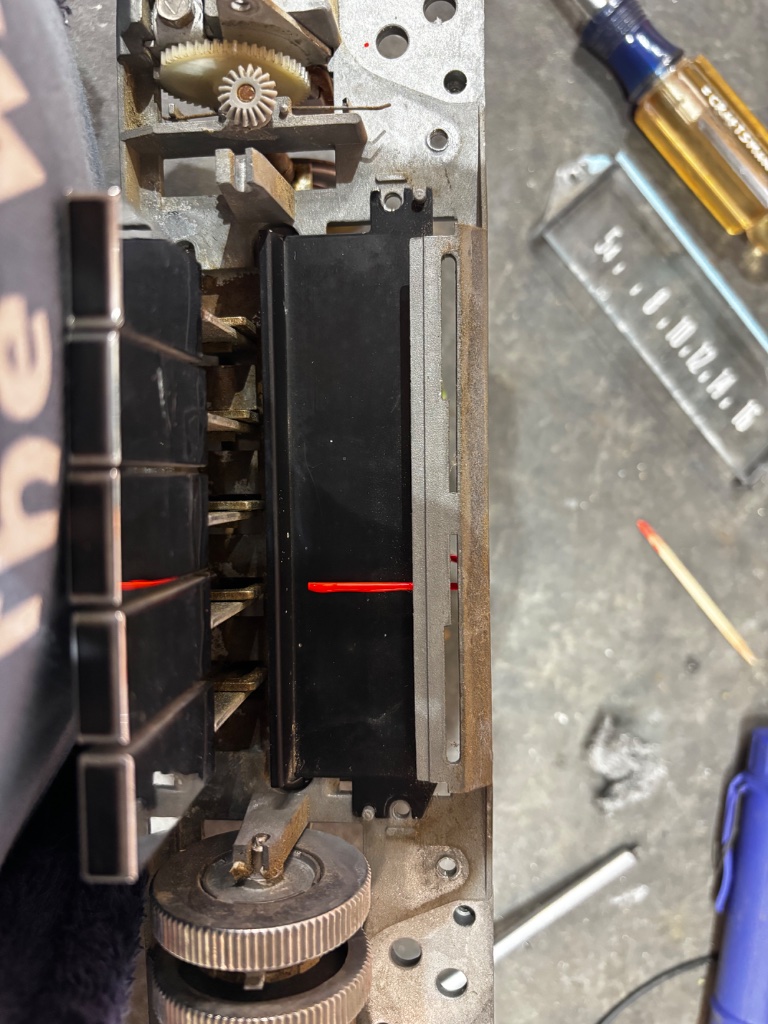
They carefully cleaned the pointer, masked around the painted surface, and refinished it with blaze orange paint — a modern, high-visibility colour that stands out sharply against the dark background of the Bendix dial scale. They also refinished the cabinet, restoring a clean, period-correct appearance.
Vintage Car Radio Repair Final Result
The completed Bendix 7BC presents beautifully. Externally, you cannot distinguish it from a properly restored original — the chrome trim remains intact, the dial looks crisp, the blaze orange pointer appears sharp and readable, and the cabinet finish stays clean.
Internally, it is a thoroughly modern device.
- FM reception,
- Bluetooth audio streaming from any mobile device, and a
- Line-level auxiliary input give the radio genuine daily-driver usefulness.
The team returned the humidity-damaged, mechanically broken, electrically deteriorated chassis to full, usable service — better than it left the factory, in several respects.
Good Afternoon
I’d be curious to the cost of a reworked radio? I have the exact unit in this article 67 Chrysler Newport. Having Am/Fm Bluetooth and the ability to have 4 speakers would be fantastic.
Thanks
Bryan